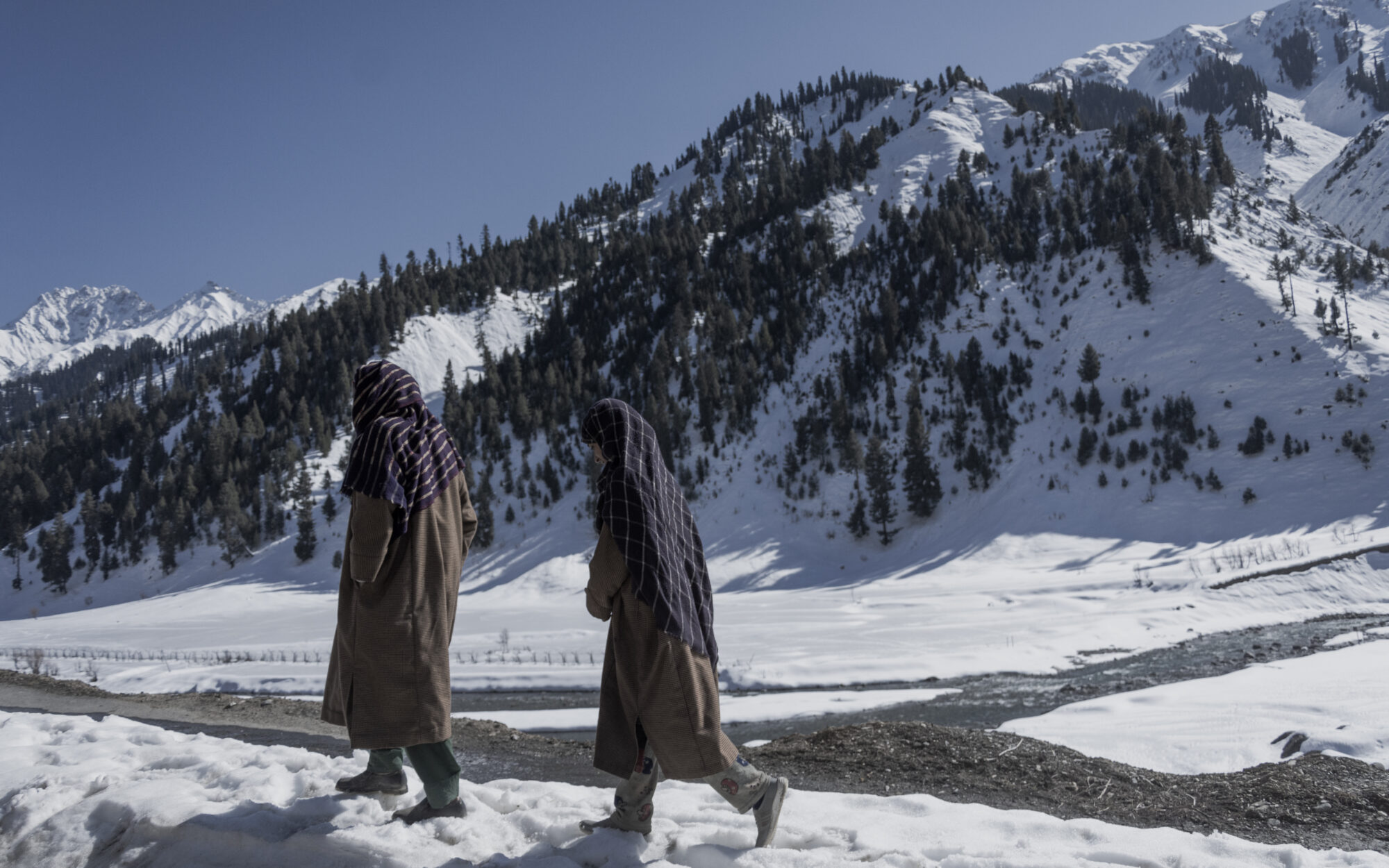
In Gurez Valley, in the remote mountains of Kashmir, winter turns childbirth into a dangerous journey, with snow-covered roads and an acute lack of healthcare forcing expectant mothers to leave their homes months in advance. Women from one of the Himalaya’s oldest Indigenous communities, Dard-shin, speak of displacement, financial strain and risking their lives to become mothers.
Tabassum Islam, 28, was five months pregnant when she left her home in the remote Gurez Valley of northern Kashmir and travelled 53 miles (86 km) to Bandipora to wait out the winter. She rents a single room near the district hospital, accompanied by her brother.
“I was worried because there are no doctors, no roads, no way out,” she says. “I didn’t know if I would survive there.”
Tabassum belongs to the Dard-Shin community, an Indigenous group native to the Gurez Valley in Indian-administered Kashmir with cultural and linguistic ties across the Line of Control into Gilgit-Baltistan, Pakistan-administered Kashmir.
Her village lies along the downstream of the Kishanganga River, in Gurez Valley, about 125 km north of Srinagar, which is lush and open in summer but closed off in winter.
The only road out—the Razdan Pass—has an altitude of 3,550 metres and connects Gurez with the world. By early December, it disappears under several metres of snow.
For nearly half the year, the road is the lifeline of the valley, which was once the gateway to the ancient Silk Road connecting Kashmir with the oasis city of Kashgar in China’s Xinjiang province and Central Asia.
Heavy snowfall closes the Razdan pass for months—typically from December to April or even May—cutting off access to hospitals, emergency services and essential supplies.
By then, many pregnant women have already left.
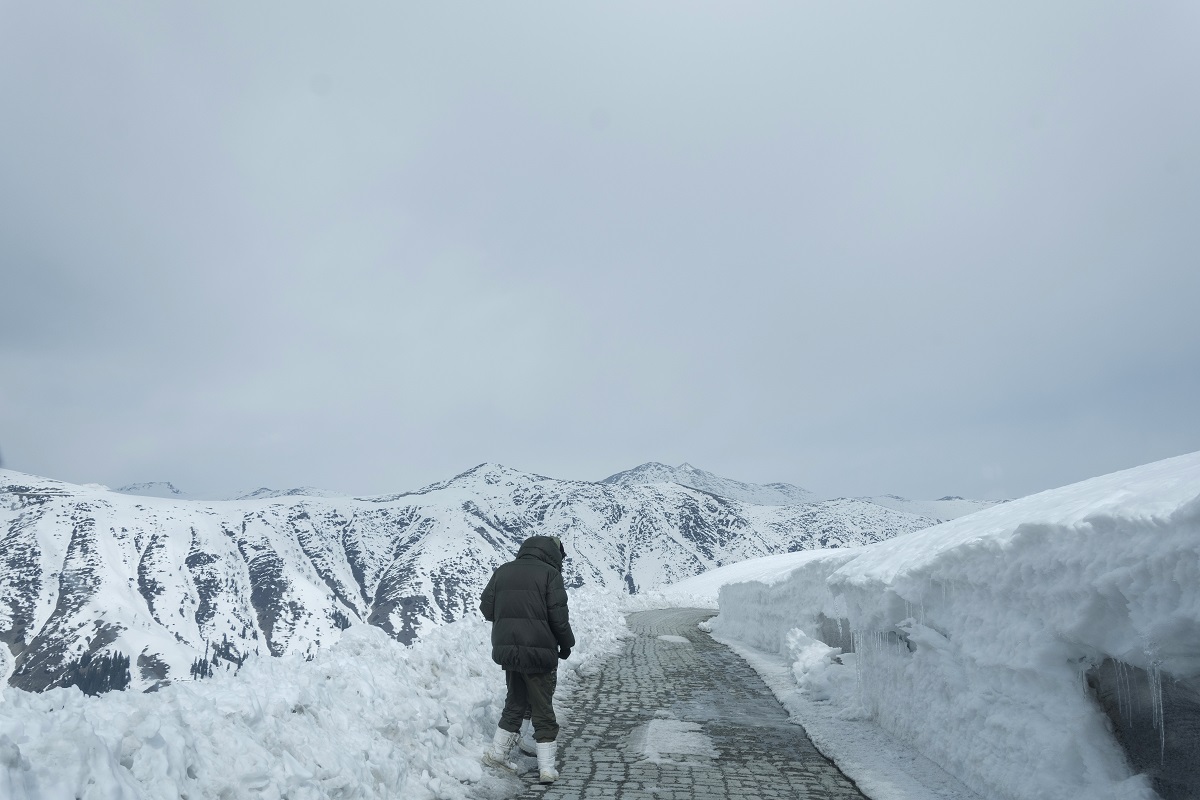
Razdan Pass, at an altitude of about 3,550 meters, is the only road connecting the Gurez Valley to the rest of Kashmir. Photograph by Aakash Gulzar.
Each year, pregnant women flee Gurez months before their due dates, relocating to towns and cities in the Kashmir region where access to hospital is possible.
It is not an organised evacuation. There is no government aid, no designated shelters and no financial assistance.
Tabassum’s husband, Nazir Chaket, works in Mumbai, India’s financial capital, about 1,800 km away, to support his family.
“The pressure is too much,” he says over the phone. “Emotionally, financially… everything. My wife is alone there. My daughter misses me. And if something happens…”
He plans to return as the delivery approaches. The couple has already been through a winter birth in 2020. They remember the uncertainty, the waiting and the fear that something might go wrong.
When winter cuts off, pregnant women are left with one choice: leave or risk death
In Gurez, childbirth is not just a medical event. It is a calculation.
There is one sub-district hospital in the valley, along with a handful of community health centres for a population of 37,992, according to the 2011 census. They provide basic healthcare but lack specialist gynaecologists, surgical facilities, blood banks, ultrasound facilities and reliable diagnostic equipment.
Even in the summer, Tabassum had to travel 100 km to Bandipora for routine ultrasound scans and checkups. In the winter, this journey becomes impossible.
“When complications come, we refer patients outside the valley,” says Shafqat Riyaz, a local health worker who has served the region for more than a decade. “But in winter, there are no referrals, nowhere to go.”
Helicopter evacuations, often seen as a last resort, are rare and exist only on paper.
They depend on the weather,” she adds. “And in emergencies, every second matters. Winter removes that margin entirely.”
This is why families leave early. By October, some begin preparing. By November, many have already left. The entire community reorganises itself around this seasonal migration. It is quiet, repetitive and deeply normalised.
Two weeks ago, on 14 October 2026, Haseena Begum, a 24-year-old pregnant woman from Mazgund village in the remote Tulail area of Gurez, died after being referred to District Hospital Bandipora, about 86km (53 miles) away. Her baby had already died in utero at Dawar Sub-District Hospital, the main town in the valley.
According to the local Block Medical Officer, Begum was first taken to Sheikhpora Primary Health Centre with severely low haemoglobin—a measure of the blood’s oxygen-carrying capacity—and was then transferred to Dawar in shock.
Doctors attempted to stabilise her and arrange a transfer to Bandipora, but heavy snowfall and restrictions on night-time movement at the Razdan Pass initially prevented the ambulance from leaving.
Begum’s family alleges that delays and gaps in emergency care contributed to the deaths, but health authorities have not established this.
Kashmir’s health authority has appointed a four-member committee to investigate the circumstances of the deaths, which have sparked protests in Gurez and renewed demands for emergency blood supplies, specialist maternity care, and a reliable winter health system in a valley routinely cut off by snow.
Shahina Begum, 32, from the perched tiny hamlet in Tulail Valley, remembers the moment that changed her decision.
A woman in her neighbourhood went into labour during a snowstorm some years ago. The roads were blocked. Then a helicopter was requested, but the weather didn’t allow it to land.
I saw her pain,” Shahina says. “That was enough.”
She left five months before her delivery date in November last year and relocated to Kangan, a town in central Kashmir.
“My last two deliveries nearly killed me,” she says. “This time, I chose to leave before something happened.”
In a valley cut off from care, maternity is shaped by distance, weather, and waiting
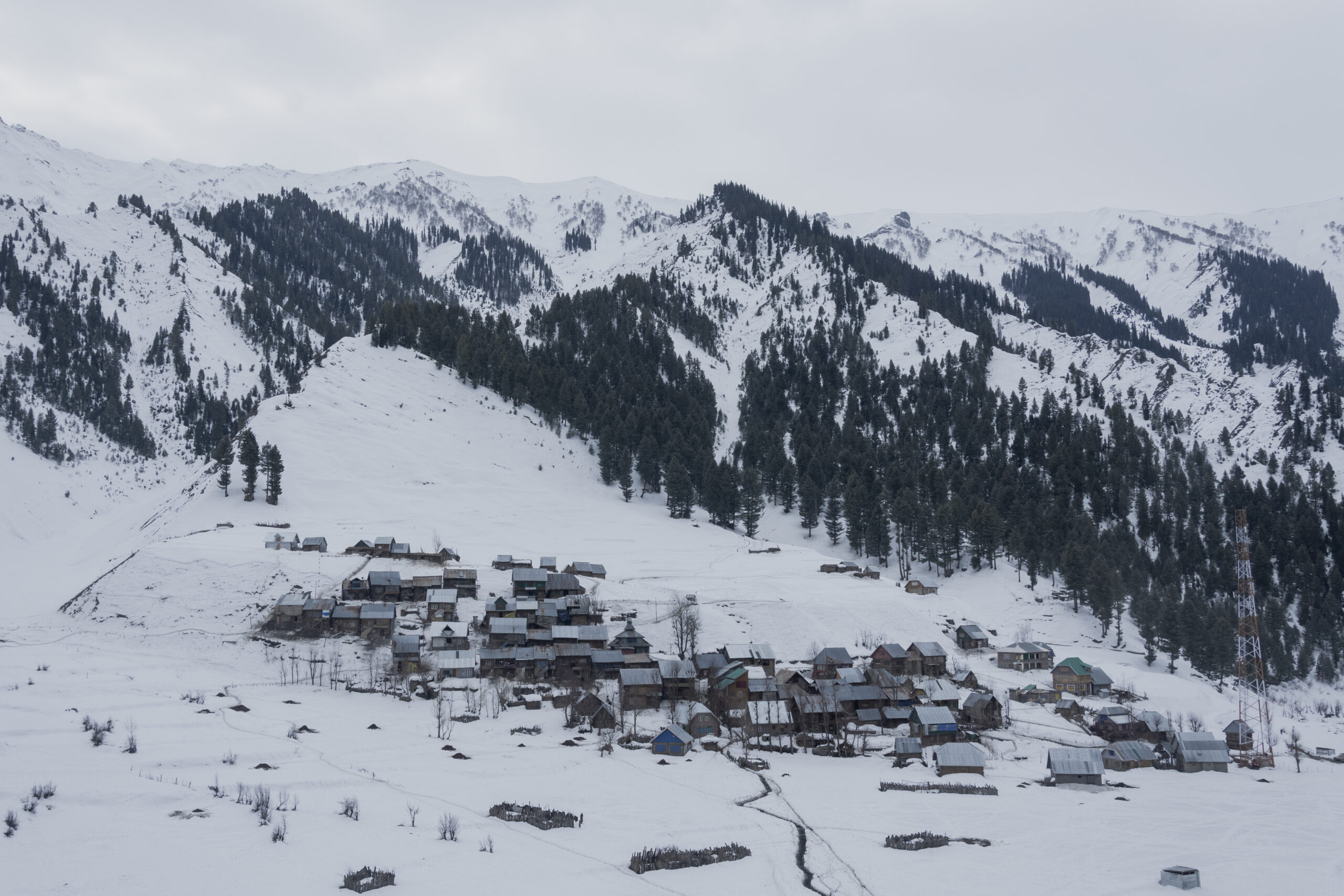
A snow-covered hamlet in Tulail Valley. Photograph by Aakash Gulzar.
Further into the northeast is Tulail Valley, where the winter comes earlier and lasts longer.
Spread across 30 villages approximately, this sub-valley faces long winters and footpaths disappear under the snow, making it almost impossible to reach the helipad.
Saleema Begum, 21, another pregnant woman, cannot forget what happened in her village, Kilshay, the last frontier from the Indian side.
A woman began bleeding heavily after childbirth. A helicopter was called. The weather prevented it from landing. For three days, they waited.
“She kept waiting,” Saleema says quietly. “We all waited.”
The helicopter did not arrive in time to save the woman.
“That memory still scares us,” Saleema says.
Now pregnant herself, Saleema lives in a cramped room in downtown Srinagar, far from her village of Kilshay—the last settlement near the Line of Control, the militarised de facto border between India and Pakistan.
What begins as precaution becomes prolonged displacement.
“I longed for home,” she says. “But we had no choice.”
For many families, leaving has a profound financial as well as emotional toll.
Rent, food, transport and medical expenses accumulate quickly. Most households in the Gurez-Tulail belt depend on farming, livestock, or seasonal tourism—income streams that are fragile and inconsistent.
Rashida Begum, 27, from Buglinder village, is expecting her third child. Complications forced her to leave early last year.
Her husband, Faqir Muhammad, now juggles odd jobs to support their stay outside the valley.
“Our monthly expenses are around ₹20,000 [Indian Rupees – about £155],” he says. “₹4,000 just for rent. I’ve had to borrow from relatives.”
Rashida’s previous deliveries were at home, without complications. This time, fear and uncertainty made the decision.
“We have no choice,” she says. “Every winter, doctors tell us to leave. It is not comfort, it is compulsion.”
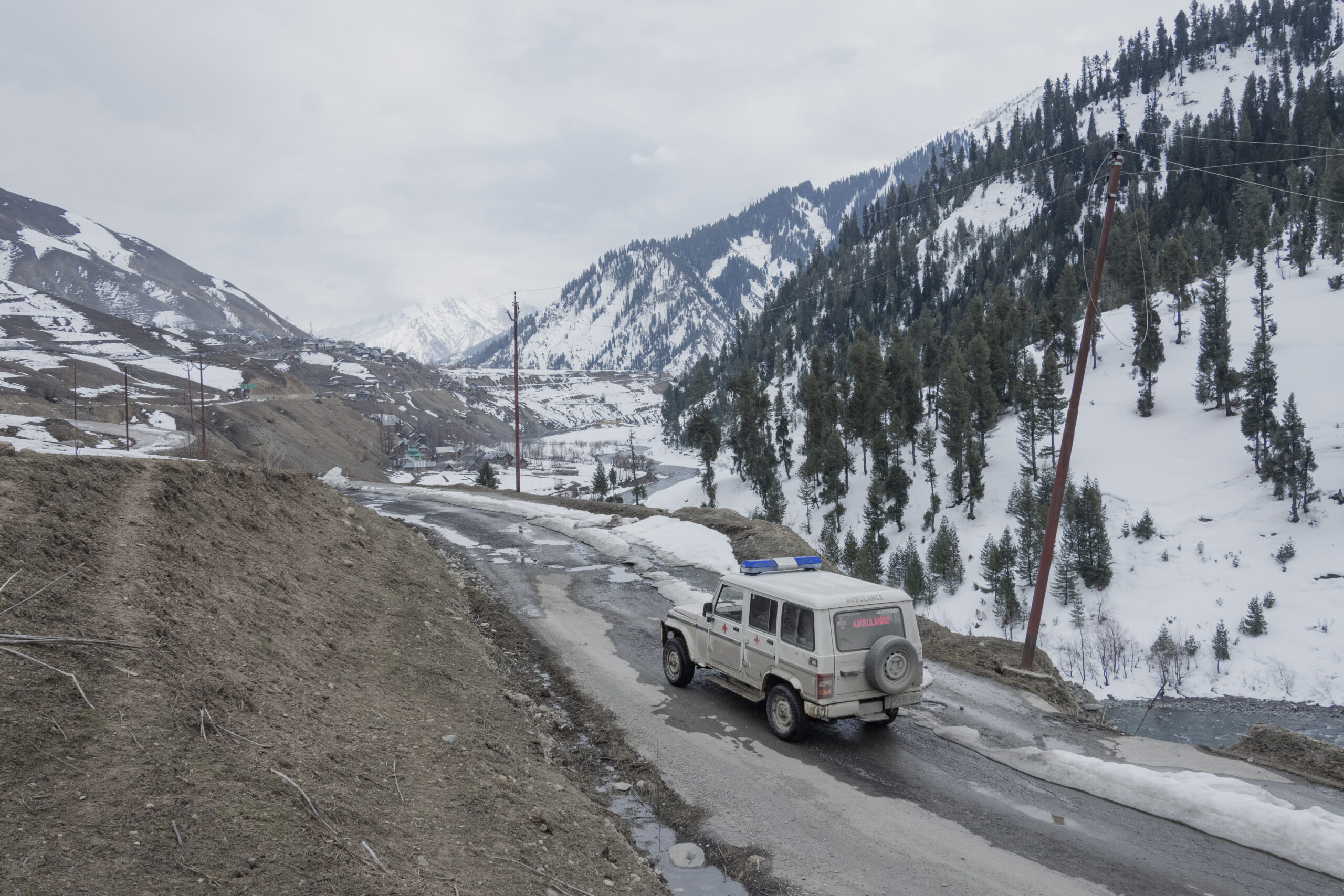
A snow-covered road in Tulail Valley, where winter often makes ambulance and emergency access nearly impossible. Photograph by Aakash Gulzar.
Between displacement and survival, Kashmir’s mountain women navigate pregnancy alone
Despite these realities, there is little structured support from the government.
Pregnant women are only advised to relocate, but there is no system in place to facilitate this. There are no maternity waiting homes, no travel subsidies, and no specific accommodation near hospitals.
Families navigate the process alone, relying on savings, loans or extended networks.
Health officials in Kashmir say efforts are underway to improve access under India’s National Health Rural Mission programmes, including strengthening primary health centres and expanding ambulance services, but in winter, infrastructure is not always sufficient. They acknowledge the challenges and acute healthcare shortages.
When roads disappear, so does access.
However, maternal mortality rates have declined significantly in Jammu and Kashmir in recent years, with 47 deaths per 100,000 live births, which are among the lowest in India. But statistics smooth out geography.
In remote areas in the Kashmir region, like Gurez, Uri, Poonch, Kupwara, Doda, and Kishtwar, winter remains the defining barrier. Most of these places are home to various local tribes such as Gujjar, Bakerwal, Dards, Gaddi, and Sippi
The valley itself is shaped by more than just terrain and indigeneity. Located near the Line of Control, Gurez exists within a fragile geopolitical landscape between India and Pakistan. Periodic cross-border shelling disrupts daily life, forcing families to evacuate with little warning.
In May 2025, such shelling displaced hundreds of residents, including pregnant women.
“We’re always ready to leave,” says Waheeda Begum, a resident of Gurez. “For snow, or for anything else.”
Tourism has increased since a post-ceasefire agreement in 2021 brought in summer income, which ended when tensions between the two nuclear-armed countries escalated. For many families, this same income funds their winter migration.
When it disappears, so do their options.
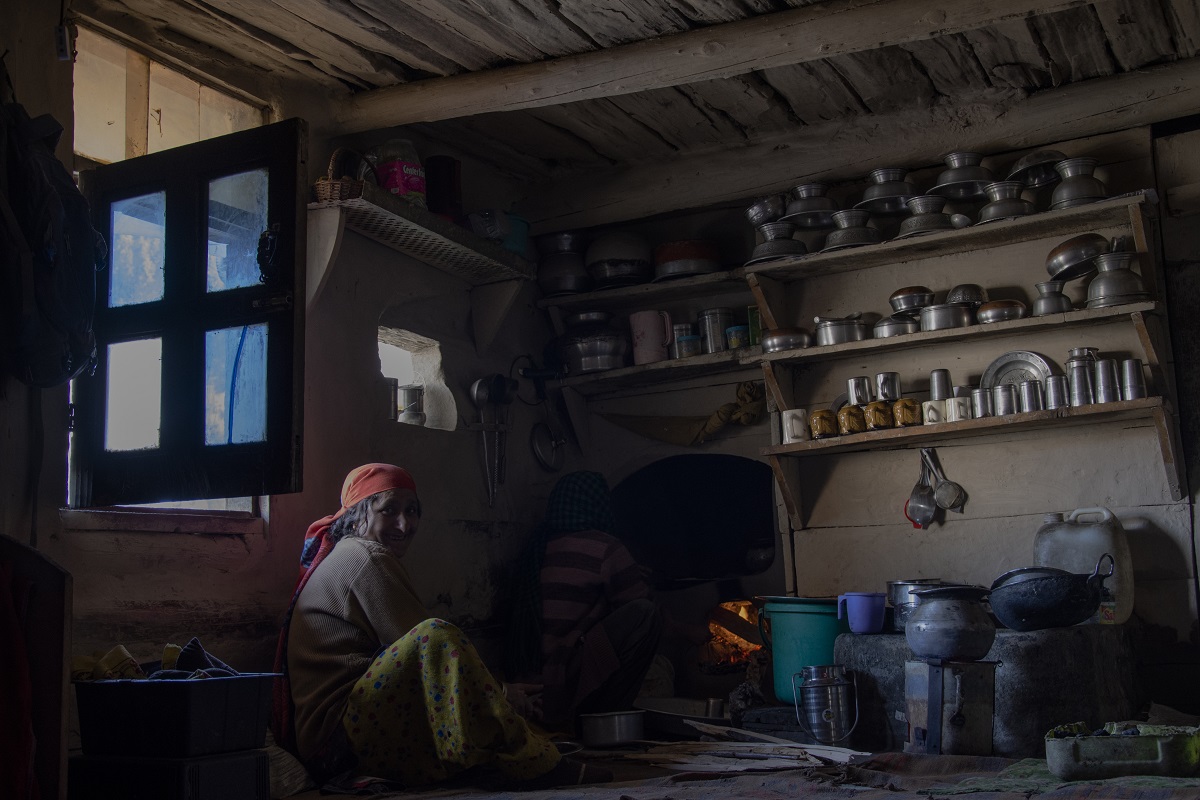
Inside a traditional winter home in Tulail Valley, where families live in close quarters with livestock to retain warmth during the colder months. Photograph by Aakash Gulzar.
For generations, childbirth in these mountains took place at home, guided by elders and traditional midwives. The Dard-Shin community’s cultural practices remain deeply rooted in these traditions. The Partition of 1947 separated this tribe across borders.
But expectations are changing. As awareness of maternal health grows, so does the demand for institutional care. Migration reflects that shift, a tension between tradition and necessity.
Back in Bandipora, Tabassum counts her days. Her room is functional, but unlike at home, she spends hours on the phone, asking about the snow, the road and the village she left last year.
Spring feels distant. That is when the Razdan Pass will reopen as movement becomes possible again. Until then, she waits.
“We leave because we have to,” she says.
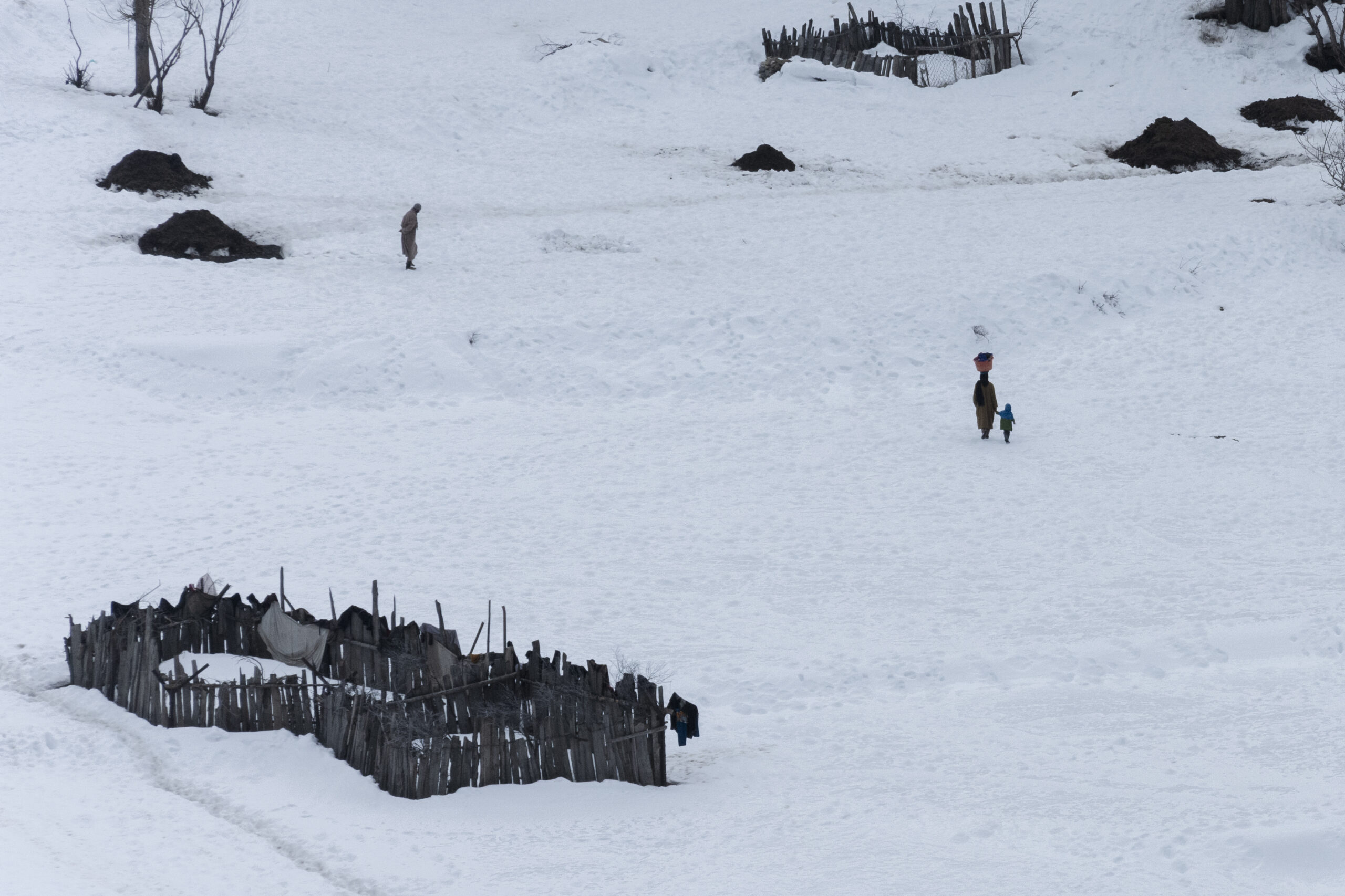
Tulail Valley, near the Line of Control in Indian-administered Kashmir. Photograph by Aakash Gulzar.
In Gurez, when winter comes, women will pack their belongings, leave their homes locked, and step onto a road that could close behind them at any moment.
They will travel distances they cannot bear, go to cities they do not know, be as pregnant by geography as by biology.
They will wait until the road opens again.
All photography by Aakash Gulzar.