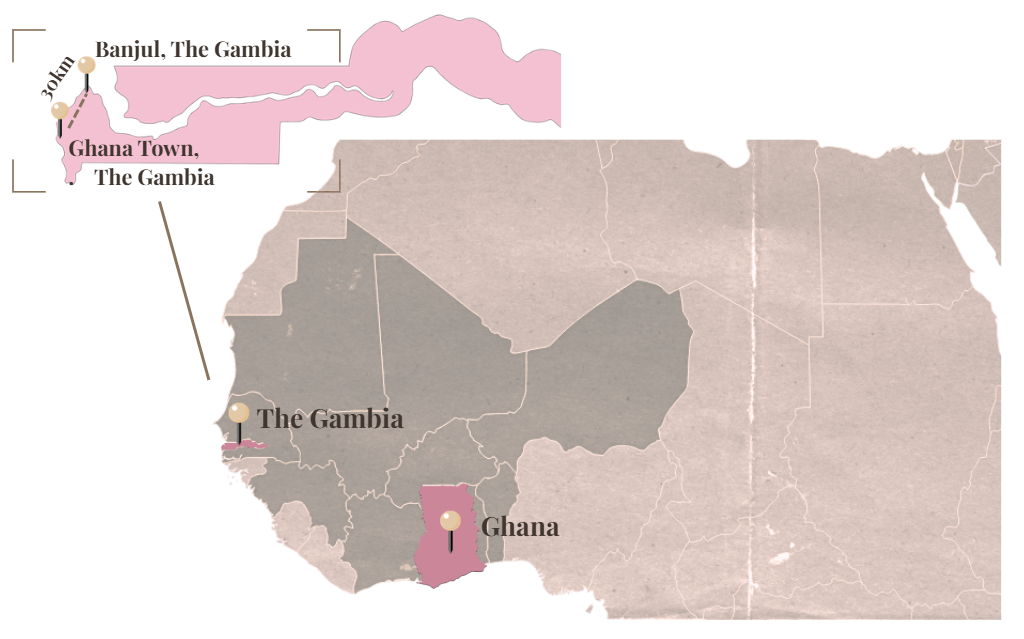
The Gambia has effectively stripped citizenship from a community which has been living in Ghana Town for generations, leaving hundreds of people “stateless”. Here, Ghana Town residents share their struggles to access healthcare, education and employment, while experts warn the introduction of biometric IDs is exacerbating “statelessness” across Africa and worldwide.
Jonathan Arkoh dreamt of becoming a lawyer. Jonathan, a youth organizer and former teacher, is one of the 1,500 people who make up the population of Ghana Town, a small fishing community less than 30km from Banjul, the capital of The Gambia.
After a preparatory degree in insurance, he applied to law schools both in The Gambia and abroad. However, his dream was cut short when he was unable to provide the formal identification required.
“The school gave me the acceptance letter, but how could I go? I didn’t have documents. And the one I wanted to do in The Gambia, I had to pay a foreigner’s fee,” said Jonathan, whose family has been living in The Gambia for three generations.
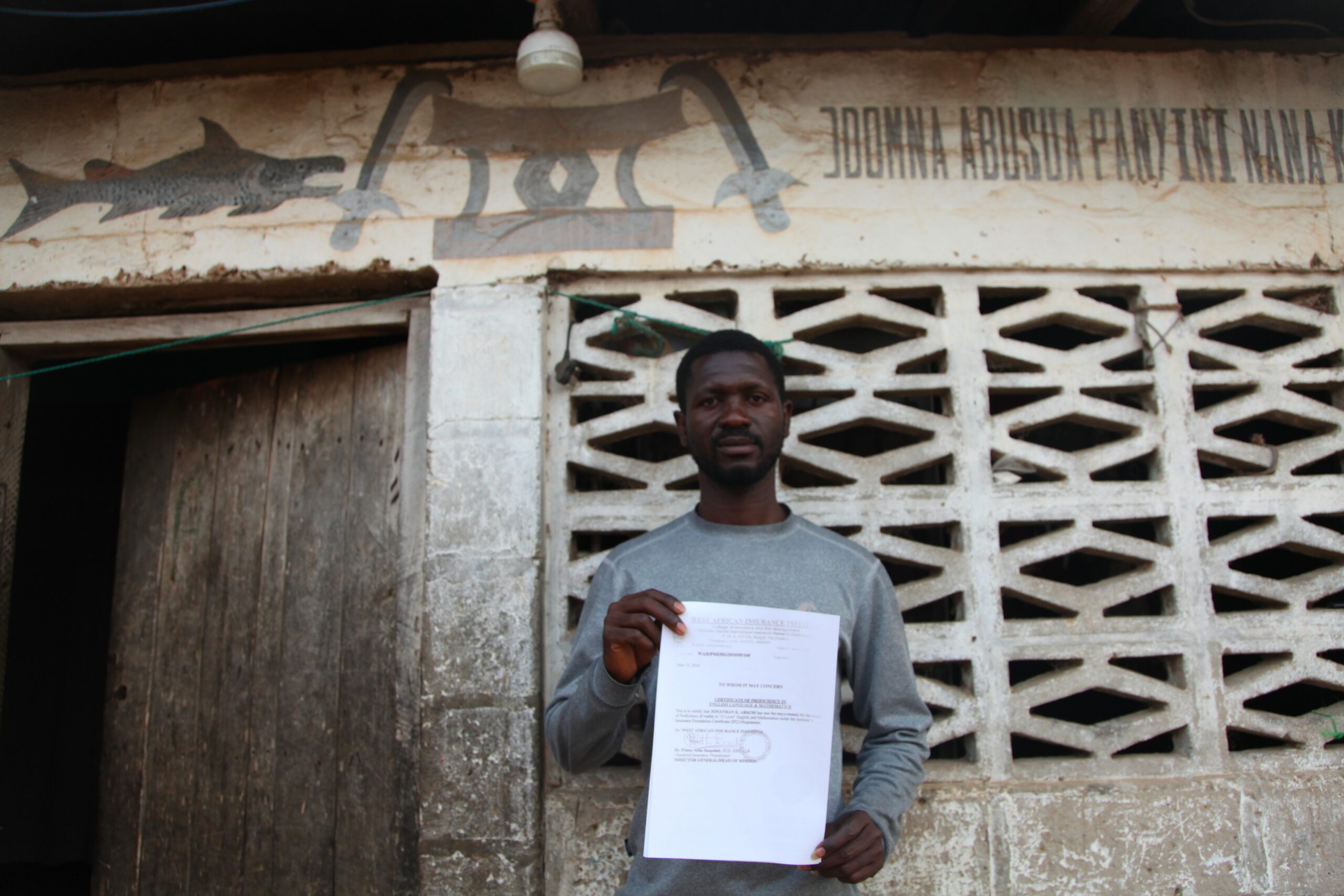
Jonathan Arkoh holding his insurance degree. He was unable to pursue further studies in law due to his ID expiring. Aris Dimitrakopoulos. February 2026
Jonathan’s grandfather, like many others in the community, arrived from Ghana in the 1950s, before The Gambia’s independence, in search of fertile fishing grounds.
“I was born here. I don’t know Ghana. My relatives come and go, but I have never gone there,” he said.
Access to higher education is just one of many problems the majority of Ghana Town’s residents have been facing after their Gambian citizenship was effectively revoked in 2017, leaving them stateless, as they do not hold Ghanaian citizenship either. Their stateless status leaves them excluded from basic services and rights, such as healthcare, education, banking, property ownership, formal employment and the freedom to travel.
A new government – a new challenge
Their challenges began when former president Yahya Jammeh, who ruled The Gambia for 21 years, lost power. The new government of Adama Barrow initiated a transitional justice process of reviewing and annulling many of Jammeh’s laws. Among those was his 2006 decision to grant citizenship and national ID cards to the residents of Ghana Town.
The Gambian constitution stipulates that an individual is considered Gambian by birth only if at least one parent is Gambian.
“When the new government came into power, the Immigration Department sought legal advice from the Ministry of Justice, and the Ministry of Justice issued a legal opinion that the issuance of those ID cards did not follow due process and therefore renders them null,” said Abdou Manneh of The Gambia’s National Human Rights Commission (NHRC).
According to an NHRC report, one of the listed reasons for that decision was that when Ghana Town residents received their ID cards, they did not give an oath of allegiance to The Gambia. Since then, authorities have stopped renewing the ID cards of most Ghana Town residents once they expire after five years.
This decision has mostly affected those Ghana Town residents who were born in The Gambia. By contrast, many of those who arrived more recently and obtained Gambian citizenship through naturalization have been able to keep it.
This is the case of Henry Donkor, who arrived in Ghana Town in 1992 and became a naturalized Gambian citizen in 2014. He has been able to renew his ID card, however, three of his children, who were born in The Gambia, cannot.
“The former president made a proclamation and gave everybody citizenship. So, my kids applied for it and got it. Now the new government cancelled all those ones. So when my kids go to renew, they tell them, ‘No, we cannot, you have to wait,’” Henry said.
“All the children that were born here and some of the adults, most of the people in Ghana Town don’t have citizenship, they are stateless,” he added.
An assessment carried out in 2024 by the Gambia Commission for Refugees with UNHCR support found that 55% of the adults surveyed in Ghana Town did not have IDs, while the rest had either expired or valid IDs that could not be renewed.
In a meeting with UNHCR in October 2025, the Gambian Ministry of Interior estimated that in total over 900 people are stateless or at risk of statelessness and committed to regularizing their status, but very little progress has been made.
“I don’t know why they are not issuing our documents, we are stateless in Ghana Town,” said fisherman Patrick Amoah, whose ID card expired five years ago. He has been unable to renew it since.
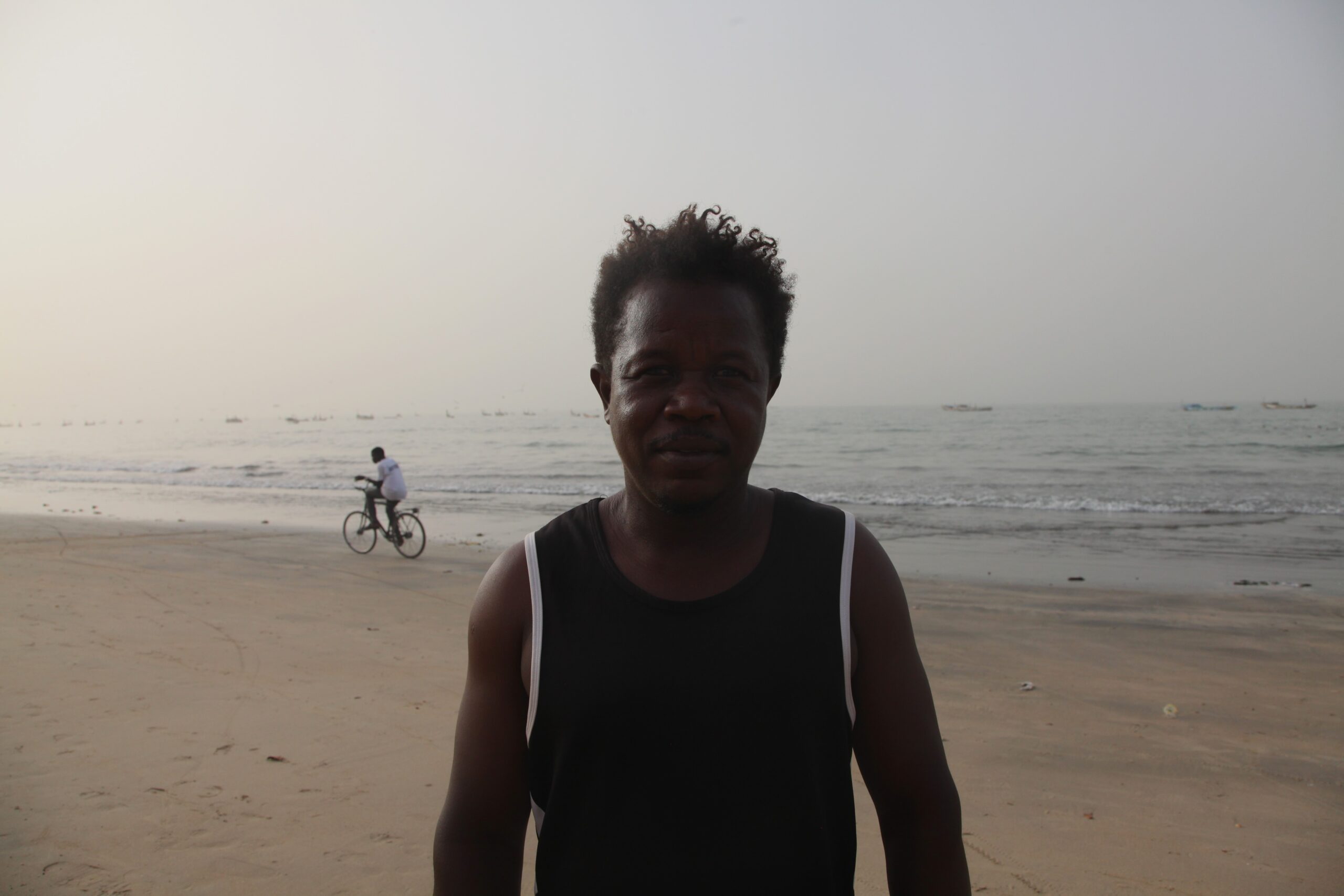
Patrick Amoah. Aris Dimitrakopoulos. February 2026.
“They tell you, ‘You are from Ghana town, the ID card is pending,'” he added, his story echoing those of other residents.
When bureaucracy masks discrimination
Laura van Waas, founder and director of the Institute on Statelessness and Inclusion, said that bureaucracy is often used to mask discrimination and exclude minority groups from citizenship.
“One of the things that will happen in many places is that you will just never receive a response. So you will apply for your ID card as a citizen or a passport and it will never be processed,” she said, adding that while their applications remain stalled, people are treated as non-citizens.
Furthermore, Patrick said that their Ghanaian surnames, lack of documents and limited fluency in the local languages make it impossible to find jobs outside fishing, a dangerous profession that can keep them at sea for up to three weeks in long wooden boats.
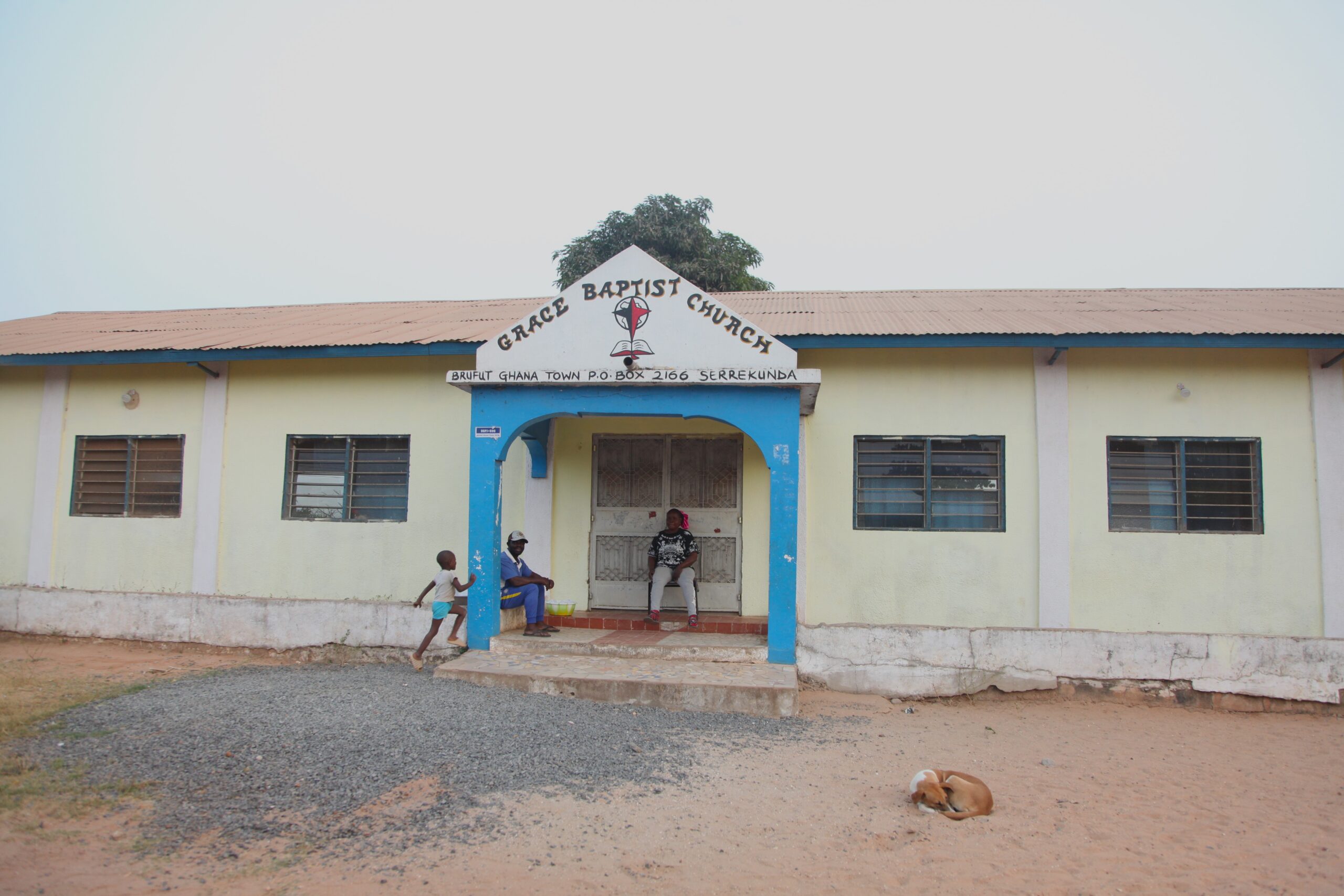
Ghana Town’s church. Most residents are Christian, but there is also a Muslim minority
“Our names identify us,” he said, explaining that the vast majority of Ghana Town residents are Christians and thus easily identifiable by their surname in The Gambia, a Muslim majority country.
“We can’t do anything in The Gambia. The only thing that we can do is what our fathers did, fishing,” said Patrick. “Many of us are graduating from school and we are still doing fishing work.”
Some community members report they have also faced harassment from immigration authorities, including raids and detentions. They said the raids stopped around September 2025 following pressure from the UN.
UNHCR spokesperson for West Africa Senan Bohissou says statelessness is an issue that reaches far beyond Ghana Town, affecting many across West and Central Africa.
“The situation in Ghana Town is not considered an isolated case. Across West and Central Africa, UNHCR assesses that millions of people may be at risk of statelessness,” Bohissou said. She added that UNHCR has reported that 4.4 million people worldwide were stateless or of undetermined nationality, but the real number is recognized to be much higher.
Waiting for change
Back in 2015, The Gambia, along with all Economic Community of West African States (ECOWAS) members, signed the Abidjan Declaration committing to eradicate statelessness by 2025. But today it remains a persistent problem for a region shaped by colonial borders where the concept of nationality is often fluid.
According to Dr Bronwen Manby, a leading expert on nationality law and statelessness in Africa, the recent adoption of biometric IDs by African states, including The Gambia, has exacerbated conditions for stateless populations in the region, as many procedures that were previously carried out with traditional or informal identification methods now require the holding of an ID.
“The reason why all of these populations are coming to attention now is because suddenly everybody has to have a biometric ID,” said Manby. “So all of these pockets of people whose status is not very clear are finding themselves asking, well, are they stateless or not stateless?” she added.
In December last year, the Gambian government committed to beginning the process of granting citizenship to Ghana Town residents. However, despite a parliamentary debate, the issue remains unresolved.
Residents report that the Gambian authorities promised them positive news by the end of February, but that deadline passed without hearing back, with many expressing doubts about the sincerity of the government’s proclamations.
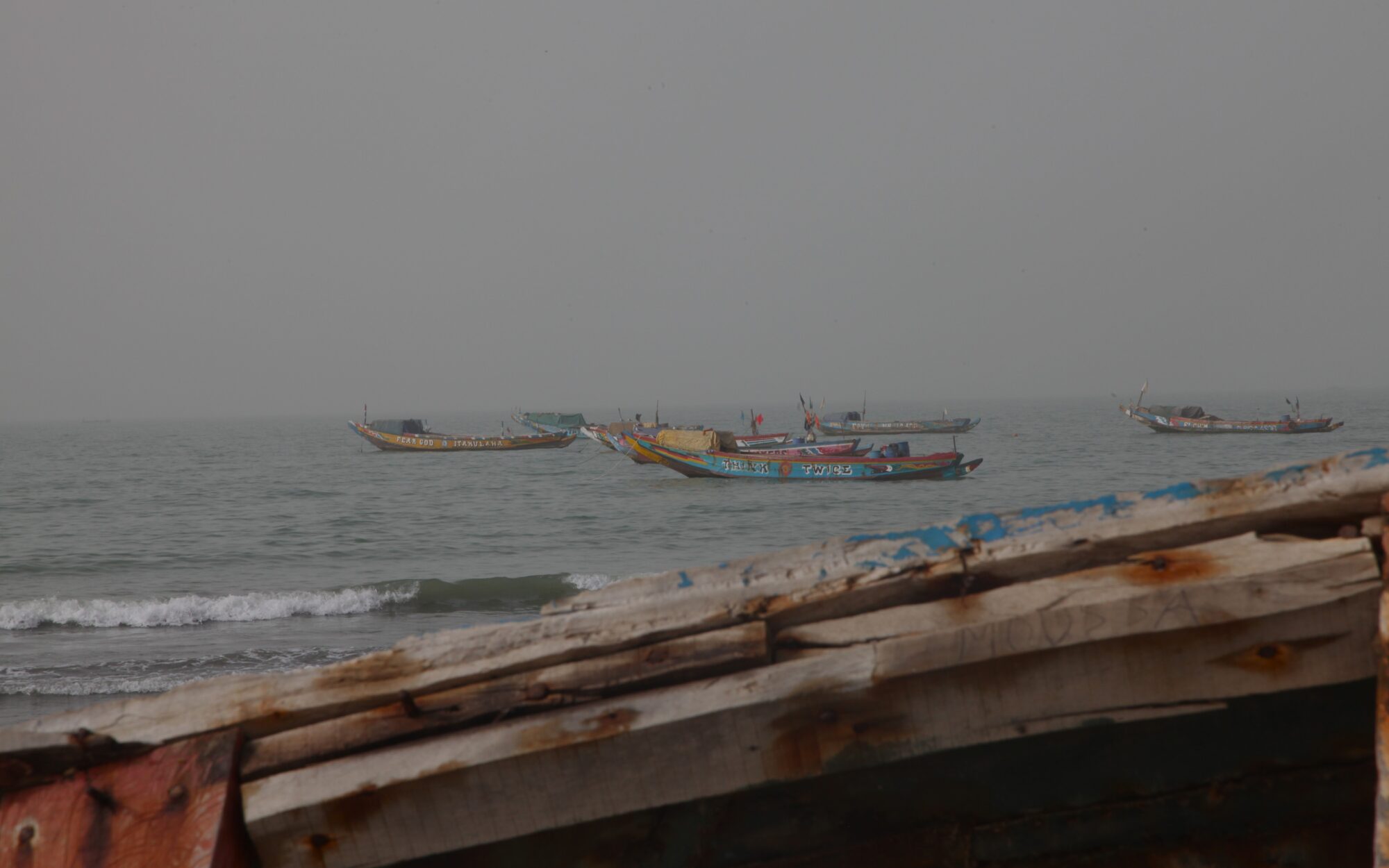
“We have been waiting and waiting. Until now, nothing. They did not respond at all,” said fisherman and community organizer Alfred Kwauku, who has painted his boat “Good Mother” in the colours of the Ghanaian flag.
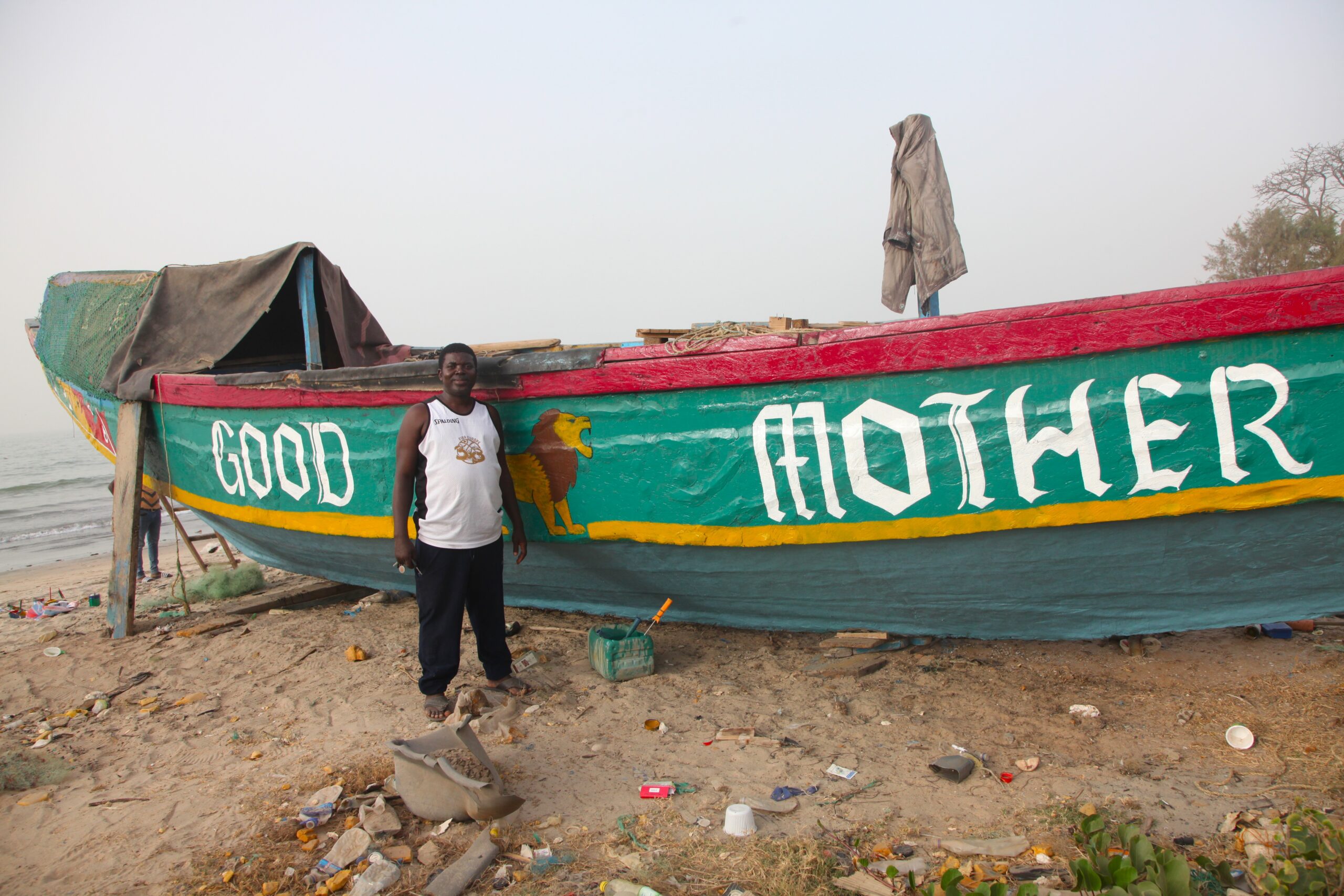
Alfred Kwauku stands in front of his boat, painted in the colours of Ghana. Aris Dimitrakopoulos. February 2026
Behind him, dozens of fishing boats in the water, waiting for their owners’ next fishing excursion, just as they had waited for their fathers’ and grandfathers’. For now, for the stateless in Ghana Town, there are few alternatives but to wait.
Read More:
- ‘Moving the goalposts’: Ukraine Scheme immigrants lose sight of settlement in UK as immigration rules keep changing
- Small boats: Can migration fiction broaden Britain’s rhetoric on refugees?
- “The Home Office is coming”: Life within the UK asylum system
All photographs by Aris Dimitrakopoulos